Google Bets on Autonomous AI Agents for the Enterprise with its I/O 2026 Framework

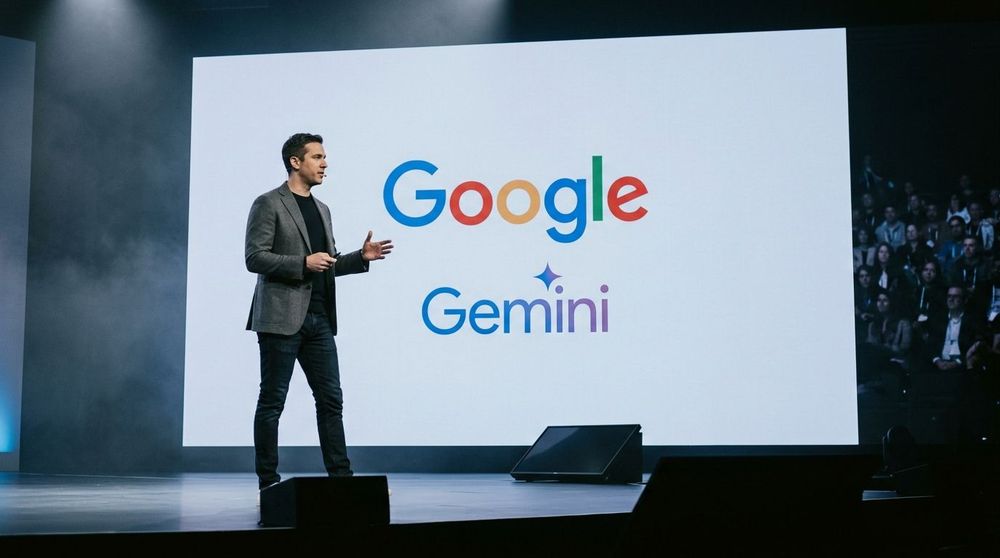
Google’s I/O 2026 announcements signal a major shift from discrete, prompt-driven AI to an integrated ecosystem of autonomous agents. The company is moving from AI as an analytical tool to an operational workforce, a transition that creates a new layer of risk for businesses. The new stack is built on the Gemini 3.5 model family, the Gemini Omni generative engine, and a developer platform called Google Antigravity, all of which demand a closer look at security and governance before any enterprise rollout.
The New Agent Stack in Action
The core of this model is an architecture where interconnected agents automate complex, multi-step tasks with minimal human oversight. The engine is Gemini 3.5 Flash, a model optimized for speed in agent workflows that features a one-million-token context window for managing long-running tasks. Orchestration is handled by Google Antigravity, a developer platform (including a desktop app, CLI, and SDK) that helps coordinate multiple sub-agents in parallel, turning manual coding into a more governed, automated process.
For businesses, the most tangible product is Gemini Spark, a personal AI agent that runs 24/7 on cloud virtual machines and integrates with services like Google Workspace. While Spark can execute tasks on its own, its main safeguard is a permission-based design. The agent must get explicit user approval before taking high-stakes actions, like sending communications or authorizing payments. This human-in-the-loop control is the foundational check against unauthorized data access or misuse of authority. This agent capability is also being built into Google Search as "information agents" that can continuously monitor topics and provide synthesized updates.
Tackling Synthetic Media and Data Integrity
The introduction of Gemini Omni, a model family that can generate dynamic video from multimodal inputs, creates a significant risk of high-fidelity synthetic media and misinformation. In response, Google is pushing a multi-layered strategy centered on content authenticity.
The primary tool here is SynthID, a technology that embeds an imperceptible digital watermark in AI-generated content. Google is expanding SynthID verification to Search and Chrome and is working with partners like OpenAI, Kakao, and ElevenLabs to establish it as an interoperable standard for identifying synthetic media.
This is backed by expanded support for Content Credentials (C2PA), a cryptographic standard that provides a verifiable history for digital assets. For an enterprise, the standard offers a reliable way to distinguish between original media and content modified by generative AI, a critical function for brand safety and legal compliance.
To help companies use these tools, Google is launching a new AI Content Detection API. It provides a mechanism for enterprises to identify synthetic media within their own operations, allowing them to build automated workflows that enforce internal governance policies for AI-generated content at scale. These tools aim to create a framework for trust as the line between authentic and synthetic content becomes harder to see.

Related articles

Securing Autonomous AI: HPE and Nvidia Launch Compliant Infrastructure for Enterprise Agents
HPE & Nvidia launch compliant infrastructure for autonomous AI agents, ensuring security with hardware enclaves, zero-trust, software guardrails & monitoring.

Enterprise AI Architecture: Deploying Partner Networks and Agentic RAG Pipelines
OpenAI's $150M Partner Network trains 300K consultants to tackle enterprise AI integration, deploying structured architectures and RAG pipelines.


Regulatory Intervention and Export Controls: Analyzing the Global Suspension of Anthropic’s Fable 5 and Mythos 5
Anthropic's Fable 5 & Mythos 5 models suspended worldwide by US Commerce Dept. over national security, a jailbreak, and export control issues. Highlighting enterprise AI risks.