
AI Factory Metrics: A Bottom-Up Analysis of Token Production Infrastructure

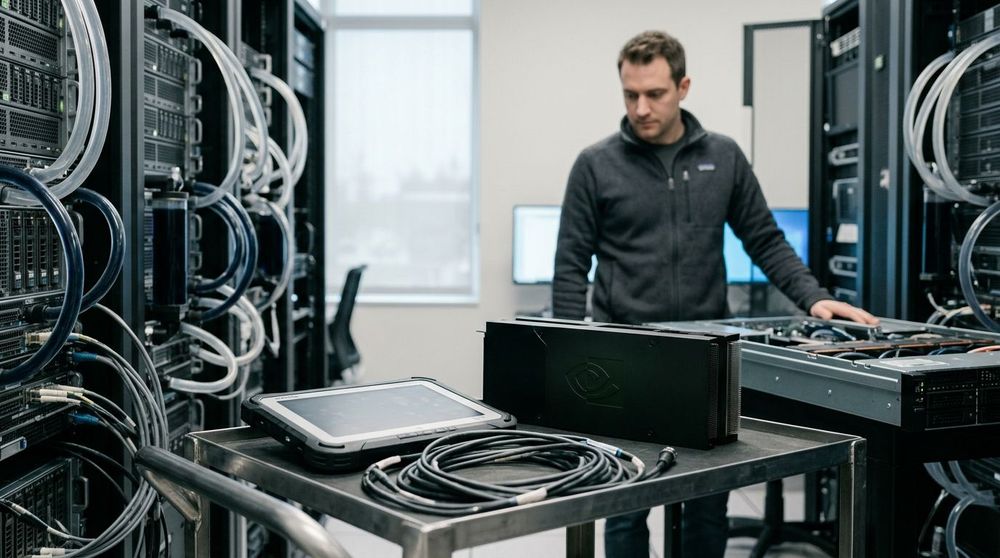
As an engineer who builds computing clusters and monitors server loads, I see the shift in our industry firsthand. The standard data center is dead. It used to be just a giant room for storing files and hosting websites. Today, we are building AI factories. These facilities represent a completely new class of infrastructure designed for the continuous production of intelligence. In the past, power plants turned fuel into electricity. My job now is to build systems that convert energy into tokens for reasoning models and agentic systems.
Tokens are the fundamental currency of AI. For people in my line of work, the only economic metrics that matter anymore are tokens per watt and cost per token. They determine if a business can sustainably run AI services at scale. We are long past running basic chat applications. Today's AI factories support autonomous agents that reason, plan, search databases, and execute complex tasks in real time. These agents often spin up their own sub-agents to solve specific problems. Since these multi-agent systems run around the clock, the workload is staggering. We need constant, massive throughput. That requires rethinking computer architecture from the ground up.
The Hardware Layer: Silicon, Network, and Cooling
At the bare-metal layer, we rely on specialized silicon to handle the heavy math. We now use systems like the NVIDIA GB300 NVL72. This platform integrates compute, networking, and memory into one massive unit. NVIDIA's full-stack approach dramatically increases throughput while lowering costs. By leveraging the Blackwell Ultra GPU, we achieve the lowest cost per token available right now. Looking ahead, the Vera Rubin platform is built to push performance per watt even higher. The entire goal is to squeeze the maximum amount of intelligence out of every drop of power.
Networking inside these factories looks completely different from older facilities. Traditional networks moved data north-south, routing traffic from the internet down to a server and back to the user. AI clusters push traffic east-west. Thousands of GPUs talk directly to each other constantly to process a single large model. If one node lags, the whole cluster stops and waits. We prevent this bottleneck using high-speed, low-latency interconnects like NVLink inside the server. Fast Ethernet or InfiniBand cables link the servers to maintain massive memory bandwidth.
Packing all these high-bandwidth memory chips and CUDA cores together creates a serious physical problem. Heat. Air cooling simply cannot handle it anymore. We have moved entirely to liquid-cooled systems. Older air-cooled facilities had a Power Usage Effectiveness of about 1.25. That meant 25 percent of the electricity was wasted just spinning fans and running air conditioners. Liquid-cooled factories drop that metric to 1.1 or lower. More of our power budget goes directly to the chips to manufacture tokens.
Software Orchestration and Deployment Operations
All this hardware means nothing without the right software stack. AI factories synchronize compute, networking, and software to manage a live balancing act. When a user sends a prompt, the initial prefill phase demands raw compute power measured in FLOPS. The subsequent decode phase, where the AI generates the answer, relies heavily on fast memory bandwidth. I use orchestration platforms like NVIDIA Dynamo and Kubernetes to schedule these jobs across the cluster in real time. The software balances these shifting demands so no GPU sits idle.
Security is another major focus since multiple companies share the same AI factory. We rely on hardware-based Trusted Execution Environments. These are secure, locked zones inside the chip itself. They keep user data and AI models totally encrypted while sitting in system memory. Even a system admin with full access cannot look inside to see what the models are doing.
Building a gigawatt-scale AI factory carries massive financial risk. We do not pour concrete or plug in a single server without building a digital twin first. Using the NVIDIA Omniverse DSX Blueprint, we map out the entire factory digitally. This allows us to simulate power, cooling, hardware systems, and network traffic before constructing the physical site. We then work alongside a broad partner ecosystem featuring Cisco, Dell, HPE, Lenovo, and Supermicro to bring these tested designs to life. By combining deep hardware integration with this extensive ecosystem, AI factories allow enterprises to transform AI into a capability woven directly into their daily operations.

Related articles
Securing Autonomous AI: HPE and Nvidia Launch Compliant Infrastructure for Enterprise Agents
HPE & Nvidia launch compliant infrastructure for autonomous AI agents, ensuring security with hardware enclaves, zero-trust, software guardrails & monitoring.


Enterprise AI Architecture: Deploying Partner Networks and Agentic RAG Pipelines
OpenAI's $150M Partner Network trains 300K consultants to tackle enterprise AI integration, deploying structured architectures and RAG pipelines.


Regulatory Intervention and Export Controls: Analyzing the Global Suspension of Anthropic’s Fable 5 and Mythos 5
Anthropic's Fable 5 & Mythos 5 models suspended worldwide by US Commerce Dept. over national security, a jailbreak, and export control issues. Highlighting enterprise AI risks.